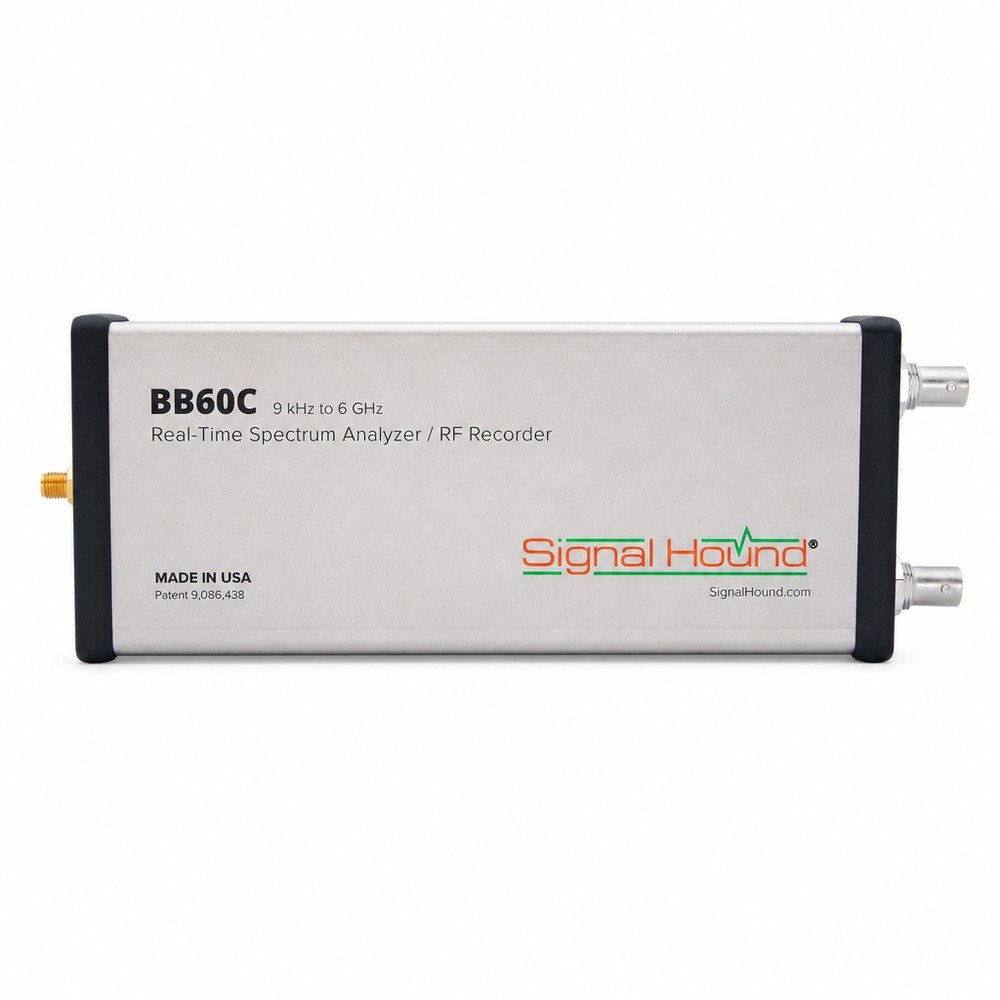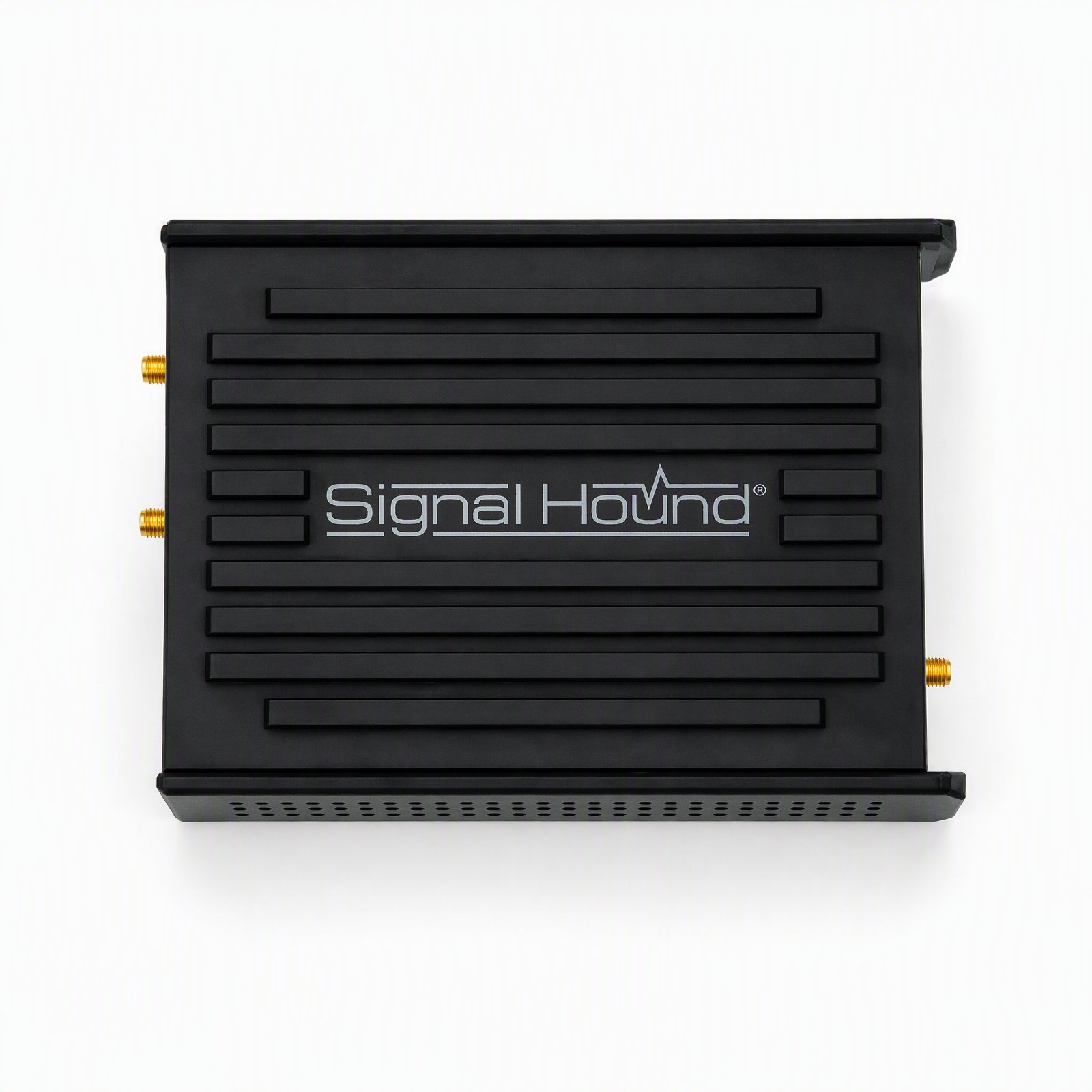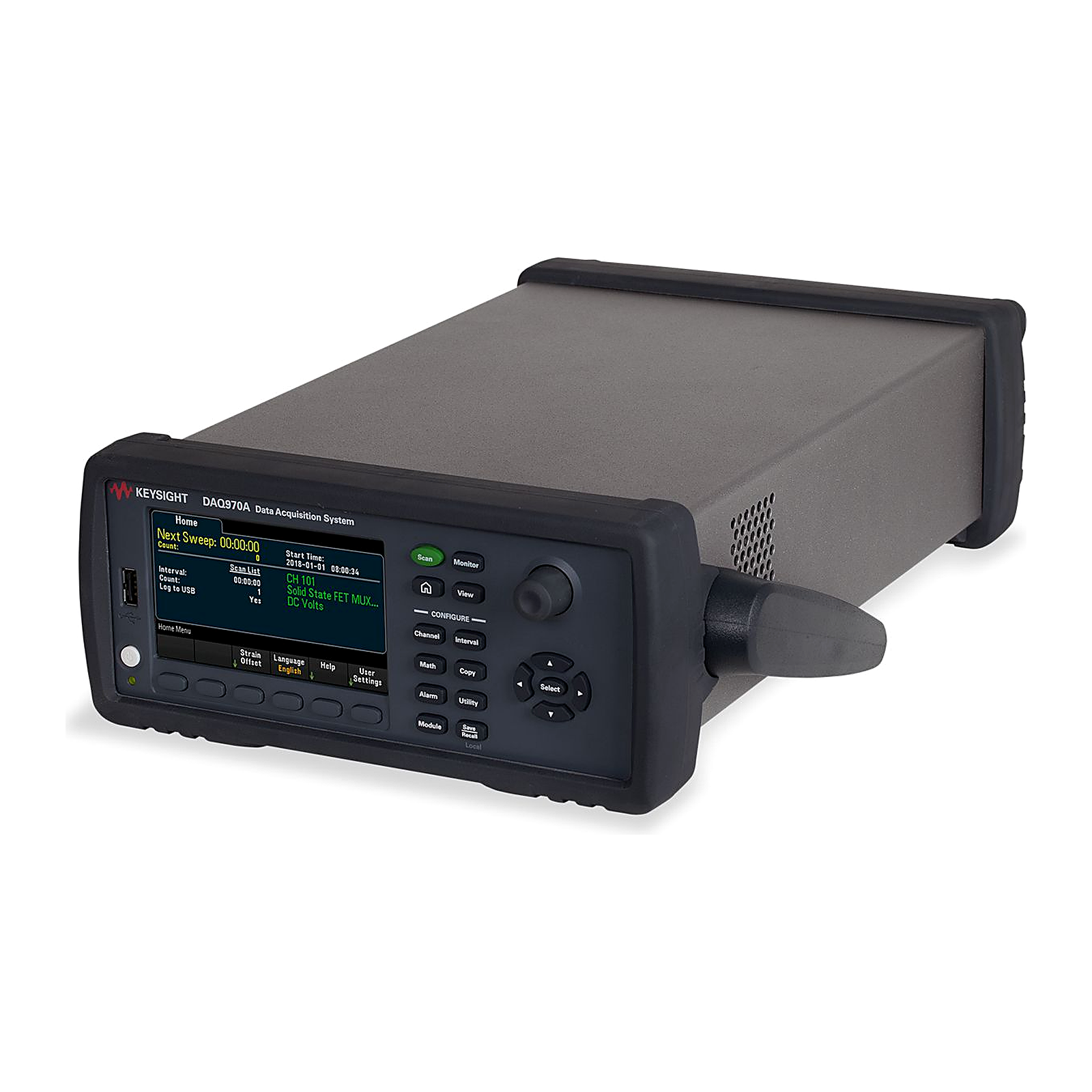
The four capabilities the solution covers

The RF front-end IC test solution offers:
- Pin-mapping configuration: flexibly allocate test resources according to the pin definitions of the device under test
- Vector calibration correction: supports vector calibration to correct amplitude/phase errors of test channels
- Multi-site execution management: one system manages parallel execution across multiple test sites
- STDF-standard data collection: collects test data in the standard format for downstream analysis
Together these four form a complete mass-production test chain. A single instrument can do vector calibration, but multi-site scheduling and STDF data landing require a software platform.
Composition of the test resources
The solution integrates RF, digital and source-measurement resources. The logic of this combination: RF channels handle RF specifications (gain, VSWR, noise, etc.), digital channels handle functional and protocol verification, and source-measurement resources handle I/V characteristics and process parameters.
The in-house JXBY-7201 series SMU provides 1–2 channels, 10fA/100nV resolution, 6½-digit reading resolution and a maximum output of ±210V/3.03A/31.8W, serving as the SMU resource in such systems.
From design verification to production-line test

The published solution explicitly covers both design verification and production-line testing stages for RF front-end ICs.
Design verification cares whether a single device meets full specifications — resources can be serial and accuracy-first; production-line testing cares about takt time and consistency, requiring multi-site parallelism and automatic data landing.
When one solution covers both stages, resource redundancy planning and test-program reuse are key — the differences between the two modes must be considered at the design stage, not retrofitted when the line goes live.
The supporting software platform
The TestCenter automatic test software platform is the companion software for such systems:
TestCenter achieves seamless integration and unified deployment of test resource management, test program development and debugging, test data management, and test program release, applicable in multiple test domains including board-level, module-level and system-level functional testing and fault diagnosis of electronic products and equipment.
It adopts an open architecture of “base platform + extension modules”: the base platform has built-in user management, resource management, test development and test execution; extension modules are software modules conforming to the extension interfaces, mainly instrument-control plugins, channel-calibration plugins and report-generation plugins.
Two forms of automated production lines

The distributed digital test software platform covers two typical scenarios:
Discrete test stations — devices under test are handled by multiple manual test stations or automatic test systems, with material flow by operators or AGV carts. The platform can interact with MES/MOM systems to obtain test tasks, assign them to digital workstations, and digitally manage the man, machine, material, method, environment and measurement elements of each station.
Unmanned automatic test lines — composed of multiple test stations and automation equipment (robotic arms, material trays, automatic fixtures), achieving automatic material flow and automatic test execution; the platform effectively manages test instruments and automation equipment, enabling automatic material matching and automatic test execution.
FAQ
- What capabilities does the RF front-end IC mass-production test solution include?
- It offers pin-mapping configuration, vector calibration correction, multi-site execution management and STDF-standard data collection, enabling full-specification automated high-speed mass-production testing, suitable for both design verification and production-line test.
- Why does one system need source-measurement (SMU) resources?
- RF front-end testing often involves RF specifications, I/V characteristics and process parameters at the same time, so the solution integrates RF, digital and source-measurement resources. Take the JXBY-7201: 1–2 channels, 10fA/100nV resolution, 6½-digit reading, ±210V/3.03A/31.8W max output.
- What exactly does multi-site execution management manage?
- It manages task allocation, execution scheduling and data landing across sites. Together with the distributed digital test software platform, it can interact with MES/MOM systems to obtain and dispatch test tasks, achieving multi-material, multi-site, fully automatic unmanned testing.
- How to choose an automatic test software platform?
- Check three things: whether it covers resource management, program development and debugging, data management, and program release; whether it supports plugin-style extensions (instrument control, channel calibration, report generation); and whether it fits the workstation form of the target line (discrete stations or unmanned lines). TestCenter's “base platform + extension modules” architecture can serve as a reference.
This guide is based on the official product pages and solution descriptions /solutions/tech/sys-col-258/. Parameters are quoted verbatim, without secondary processing.
We provide pre-sales selection consulting, on-site solution planning, technical support, operator training and after-sales calibration services. Phone / WeChat / WhatsApp: +86-15626514602 Email: sales@jxby.tech Service hours 08:00–22:00.
Address: Room 412, Building 1, Phase 1, Dongjiu Innovation Technology Park, No. 76 Bulan Road, Xialilang Community, Nanwan Street, Longgang District, Shenzhen, Guangdong, China